Questions?
512-777-0154

ADU financial benefits are attracting attention from homeowners who want to get more value from the property they already own. A backyard that once sat unused can become a source of income, extra living space, or support for family members.
An accessory dwelling unit, often called an ADU, gives homeowners more flexibility without the need to buy another property. Some use the space to earn rental income. Others create room for aging parents, adult children, or guests.
No matter the reason, an ADU can provide financial opportunities that continue long after construction is complete.
Adding ADUs is about more than creating extra square footage. It can open the door to new income opportunities, increase the value of your home, and help support changing family needs.
Some benefits show up quickly, while others build over time. From rental cash flow to retirement planning, these advantages can make a lasting impact on your finances.

For many homeowners, the biggest draw is rental cash flow.
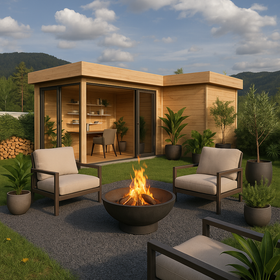
A detached ADU, like Clockhouse Bristol 44mm, can function as a separate rental unit, creating steady monthly rental income from long-term tenants. Instead of leaving backyard space unused, homeowners can turn it into an asset that generates revenue every month.
Long-term rentals also provide predictability. Rent payments typically arrive on a consistent schedule, making it easier to budget for household expenses, maintenance costs, or savings goals.
Demand for smaller rental homes continues to grow in many markets. Young professionals, healthcare workers, students, and retirees often seek affordable housing options that offer privacy without the expense of a full-sized home.
A well-designed ADU, like BlueWater Bungalow 160, can meet that demand.
Over time, rental income may help pay down debt, build an emergency fund, or contribute toward future investments. Some homeowners even use the additional income to speed up mortgage payments.
While rental rates vary by location, the opportunity to create recurring income remains one of the strongest ADU financial benefits available today.
Not every homeowner chooses a traditional lease.
In areas with strong tourism, an ADU may generate substantial rental cash flow through the vacation rental market. Travelers often prefer private accommodations over hotels, especially for longer stays.
That demand has helped create opportunities for Airbnb ADU income.
Short-term rentals typically allow owners to adjust pricing based on seasonality and demand. A busy summer travel season or local event calendar can significantly increase earning potential.
Flexibility is another advantage.
The Sigrid 70 Garden Room can remain available for visiting family members when needed and return to the rental market when vacant. This creates a balance between personal use and income generation.
Local regulations should always be reviewed before listing an ADU as a short-term rental. Rules vary widely between cities and counties.
Where permitted, however, short-term rentals can provide strong income potential and help maximize the return on investment ADU owners seek.
Related: Airbnb vs Long-Term Lease: Choosing Your Ultimate ADU Rental Strategy

Rental income often gets most of the attention, but it's only part of the story.
Many homeowners build ADUs because they can increase property value while supporting long-term home equity growth.
Properties with additional living space tend to attract more buyer interest. A Sunbeam Lakehouse 70mm adds flexibility that appeals to families, investors, and multigenerational households.
Potential buyers may view the unit as a future rental opportunity, guest house, home office, or private living space for relatives.
That versatility can make a property more competitive in the housing market.
At the same time, ongoing property appreciation can further strengthen equity. As home values rise, the investment made in a Skanderborg 44 Garden Room may continue contributing to overall wealth.
The exact increase depends on local market conditions, design quality, and demand. Still, many homeowners see an accessory dwelling unit value that extends far beyond rental income alone.
Real estate investing often requires substantial capital.
An ADU, like Versa 160 Atrium Loft 70MM, offers a different path.
Instead of purchasing another property, homeowners can create a backyard investment on land they already own. This approach allows people to enter real estate investing without taking on the costs associated with acquiring a separate property.
The benefits can be significant.
Existing utilities, infrastructure, and land ownership may reduce development costs compared to purchasing a standalone rental property.
A successful backyard development project can also provide valuable experience managing rental income, maintenance schedules, and tenant relationships.
For homeowners interested in building wealth through real estate, an ADU can serve as a practical first step.
Housing needs often change with age.
That's one reason ADU financial benefits for seniors continue to attract attention among homeowners and families planning for the future.
An ADU, like Farum 44 Garden Room, can support aging in place by creating a comfortable living space close to family members. Seniors maintain privacy while remaining connected to a support network when assistance is needed.
The financial benefits can be substantial.
Living in a Wallis 44 ADU may reduce housing expenses compared to retirement communities or other housing alternatives. Some homeowners also generate retirement income by renting the unit before moving into it later.
This flexibility allows the property to adapt as life circumstances change.

Retirement often brings new financial priorities.
For some households, an ADU creates opportunities for independent senior living while generating additional elderly income.
A homeowner may choose to downsize into the ADU and rent the primary residence. Others may continue living in the main home and rent the ADU to tenants.
Both approaches can create supplemental income that helps offset living expenses.
Smaller rental units, like Harvest Grand Bungalow 107, also tend to attract consistent demand, which can help maintain occupancy and support stable cash flow throughout retirement years.
Long-term care costs continue to rise across the country.
As a result, many families are exploring alternatives that provide both independence and financial savings.
Among the most valuable ADU financial benefits for seniors is the potential to reduce expensive assisted living expenses.
Housing aging parents in an ADU allows family members to remain nearby while preserving privacy for everyone involved. This arrangement can lower housing costs and reduce reliance on external care services.
The resulting eldercare savings may add up significantly over time.
For households planning years ahead, a Glostrup 44 Garden Room can provide flexibility while helping manage future care expenses.
Housing costs represent one of the largest monthly expenses for most homeowners.
That's why many people build ADUs to help offset primary mortgage obligations.
This strategy, commonly known as house hacking ADU, uses rental income to reduce the overall cost of homeownership.
Monthly rent can help cover mortgage payments, property taxes, insurance premiums, and maintenance expenses.
Even a modest amount of rental income can create additional breathing room in a household budget.
Over time, those savings may be redirected toward investments, debt reduction, education expenses, or retirement planning.

Building an ADU is only part of the equation.
Taking advantage of available programs and funding opportunities can improve returns and reduce upfront expenses.
Consider the following options:
The long-term ADU financial benefits extend far beyond creating extra living space. An accessory dwelling unit can generate rental income, support family members, increase home equity, and provide greater flexibility for future housing needs.
For some homeowners, it becomes a source of passive income. For others, it offers a practical solution for retirement planning or multigenerational living.
An ADU investment decision requires careful planning, but the potential rewards can continue for years. When construction costs, financing options, and local regulations are evaluated carefully, an ADU can contribute to long-term financial success while making better use of the property you already own.